


 Source gavi.org
Denied Care, Denied Dignity: Transgender Persons and Stigma in Pakistan’s Healthcare System
Healthcare settings are meant to be spaces of care, safety, and dignity, yet for many transgender persons in Pakistan, particularly in Khyber Pakhtunkhwa, they often become sites of stigma, rejection, and trauma. While HIV and other health concerns demand timely and compassionate responses, transgender persons frequently encounter discrimination that discourages them from seeking care at all. This stigma within healthcare institutions not only violates basic human rights but also undermines public health goals by pushing already marginalized communities further into invisibility.
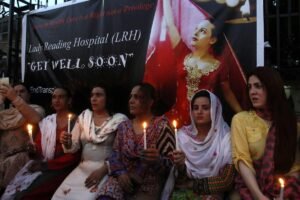
A recent incident in Abbottabad brought this reality into sharp public focus. A photograph went viral showing a transgender person lying on the road outside a hospital, reportedly after being denied or neglected medical attention. The image sparked widespread criticism and public outrage, raising uncomfortable questions about how healthcare providers treat transgender patients and whether hospitals are truly prepared to uphold the principle of care without discrimination. While the specific circumstances of the case require proper investigation, the symbolism of the image resonated deeply because it reflected experiences that transgender communities have been reporting for years.
For transgender persons, entering a hospital often means bracing for humiliation. Many report being mocked, stared at, misgendered, or subjected to invasive and irrelevant questioning about their bodies or personal lives. Confidentiality is frequently compromised, with staff discussing a patient’s gender identity or HIV status openly, sometimes in front of other patients. In some cases, care is delayed, refused outright, or made conditional on compliance with moral expectations. These practices turn healthcare encounters into experiences of fear and shame rather than healing.
Such stigma has serious consequences. Transgender persons may delay seeking care until conditions become life-threatening, avoid follow-up visits, or abandon treatment altogether. For those living with HIV, discrimination in healthcare settings can interrupt antiretroviral therapy, increasing health risks for individuals and contributing to broader public health challenges. The problem is not merely individual prejudice but systemic failure one rooted in lack of training, absence of accountability, and weak enforcement of ethical standards.
Training of healthcare providers is a critical but insufficiently addressed need. Medical and nursing education in Pakistan rarely includes structured content on gender diversity, transgender health needs, or the legal rights of transgender persons. As a result, many providers lack even basic competencies, relying instead on stereotypes or personal beliefs when interacting with transgender patients. Training must go beyond awareness sessions and focus on building core competencies, including respectful communication, understanding gender identity, maintaining confidentiality, and delivering gender-affirming care without bias.
However, training alone cannot address the problem unless it is paired with strong redressal and complaint mechanisms. When transgender persons face discrimination or rejection in hospitals, they often have nowhere to turn. Fear of retaliation, lack of trust in institutional processes, and absence of accessible complaint systems discourage reporting. Clear, confidential, and independent grievance redressal mechanisms must be established within healthcare institutions, allowing patients to report discrimination safely and ensuring that complaints are investigated and acted upon transparently.
Equally important is the enforcement of a clear code of ethics within healthcare settings. While ethical guidelines exist on paper, they are rarely operationalized in ways that protect transgender patients. Hospitals and health departments must explicitly prohibit discrimination based on gender identity and HIV status, define consequences for violations, and ensure that ethical conduct is monitored regularly. Ethical care should not depend on the goodwill of individual providers but be embedded in institutional culture and practice.
Respecting the legal rights and identities of transgender persons is also central to stigma-free healthcare. Transgender persons in Pakistan have legal recognition of their gender identity, yet this recognition often disappears at hospital doors. Misgendering, refusal to acknowledge identity documents, or forcing individuals into male or female wards against their identity violates both dignity and law. Healthcare providers must be trained to understand and respect these legal protections, ensuring that transgender persons are treated in accordance with their self-identified gender.
The Abbottabad incident should serve as a wake-up call rather than a fleeting moment of outrage. It highlights the urgent need for systemic reforms that combine training, accountability, ethical clarity, and rights-based approaches. Creating inclusive healthcare environments is not only a moral obligation but a public health necessity. Until transgender persons can enter hospitals without fear of humiliation or rejection, stigma in healthcare settings will continue to cost lives—and silence will remain one of its most dangerous consequences.

